Written by
Delphine - CEO
Published on
September 23, 2026
Read time
7
min
Category
Business Travel Paris
How to build a multi-day roadshow in Paris: choosing the airport, sequencing meetings by district, sizing the vehicle and absorbing changes on the day.

A corporate roadshow in Paris is a sequence of investor or client meetings held across the city over one or several days, linked by a private chauffeur who stays with the party throughout. The vehicle is booked by the hour or the day rather than trip by trip, so the schedule can change without the transport having to be rebooked.
Paris concentrates its business addresses in three places that do not behave the same way. The 8th arrondissement and the Golden Triangle hold most of the private banks, family offices and law firms. The 1st and 2nd hold the historic financial addresses around the Bourse and Place Vendôme. La Défense sits outside the city proper, on the other side of the Arc de Triomphe.
The distance between the 8th and La Défense is around eight kilometres. Depending on the hour, it takes fifteen minutes or fifty. That single variable ruins more roadshow schedules than any other, because it is invisible on a map and it does not appear in a calendar invitation.
Paris also restricts what a vehicle may do. Standing at many prestigious addresses is not permitted, and the streets around Place Vendôme and the Faubourg Saint-Honoré are narrow, one-way and frequently closed for events or security. A chauffeur who knows the city does not park in front of the door and wait. He positions himself where he is allowed to wait, and reaches the door the moment your principal steps out.
Paris has three, and they are not interchangeable. Charles de Gaulle handles most long-haul arrivals and sits around forty minutes north-east of the centre outside peak hours. Orly is closer to the south and often faster for European flights. Le Bourget serves private aviation and is the shortest transfer of the three.
The airport determines the earliest realistic first meeting. An overnight flight landing at Charles de Gaulle at 06:40 does not produce a credible 08:00 meeting in La Défense. It produces a comfortable 09:30 one. Building the day backwards from the arrival, rather than forwards from the wish list, is the single most useful discipline in roadshow planning. Our airport transfer service monitors the flight in real time, so a delay moves the chauffeur, not the schedule.
The instinct is to sequence meetings by seniority, putting the most important name first. In Paris this is expensive. Two meetings in the 8th separated by one in La Défense costs roughly ninety minutes of driving that a different order would have saved entirely.
Cluster by district, then order within the cluster. If one appointment must sit outside its geographic group, place it either first or last in the day, where the journey overlaps with the arrival or the departure.
Meetings overrun at the end, not at the beginning. Twenty minutes of buffer after each appointment is worth more than an hour held in reserve at midday. It also spares your principals the experience that damages a roadshow most: arriving visibly rushed at an address where composure is the point.
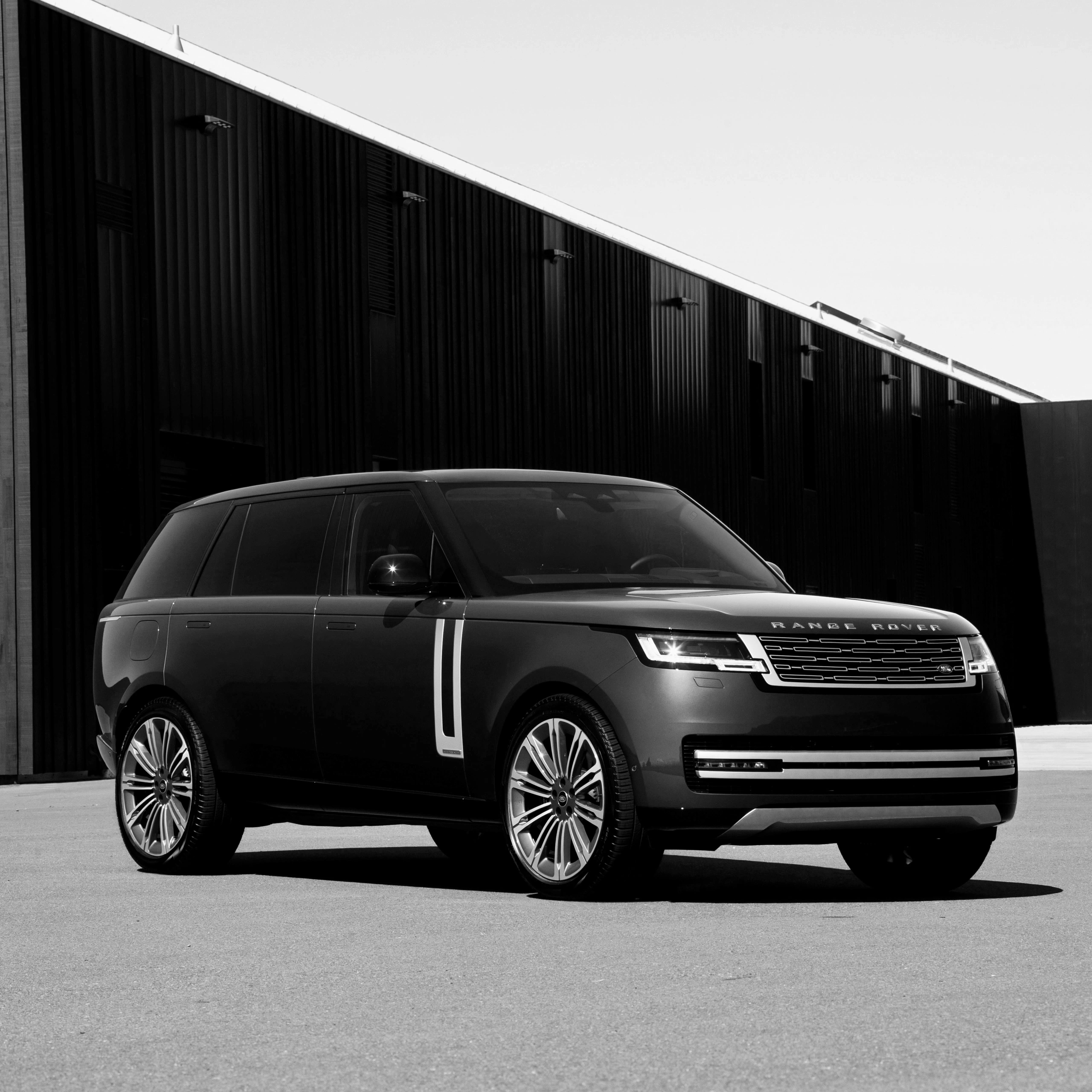
The decision is made on three counts: how many principals travel together, how much luggage moves with them, and whether the vehicle needs to serve as a working space between appointments.
Two mistakes recur. The first is booking a sedan for three people with luggage, which turns every transfer into a negotiation about the boot. The second is booking a van for two, which reads as group transport rather than a private car and quietly changes the register of the arrival.
Roadshows are booked as hourly hire, also called as directed, rather than as a series of point-to-point transfers. The distinction is not administrative. It decides what happens when the day moves.
With point-to-point bookings, each journey is a separate contract with a separate pickup time. A meeting that overruns by twenty-five minutes breaks the next booking, and someone has to rebook it while the principal is still in the room. With hourly hire, the chauffeur and the vehicle are yours for the duration. The car waits. Nothing is rebooked, because nothing was booked trip by trip in the first place.
This is why serious roadshow transport is quoted by the day rather than by the journey, and why the roadshow service is built around a dedicated vehicle rather than a dispatch queue.
On a roadshow the chauffeur hears everything. Conversations continue in the car because there is nowhere else to have them, and the person at the wheel is present for all of it. Discretion is therefore not a courtesy but a working condition, and it is a matter of training rather than temperament.
Language matters as much. A chauffeur who works in English removes an entire category of friction for a visiting delegation. At DBS EXPERIENCE our team answers in English and in French, and Russian-speaking chauffeurs can be requested for a journey.
Continuity matters too. The same chauffeur across the full roadshow learns the party, the pace and the preferences by the second appointment. Rotating chauffeurs between meetings resets that each time.
No roadshow runs as written. A meeting is moved to a different floor of a different building, a flight is delayed, a lunch is added at short notice. The question is never whether the schedule will change but who carries the cost of the change.
When transport is coordinated by one team holding the whole day, the adjustment happens between the chauffeur and the dispatcher, and the traveller learns about it only as a revised arrival time. When transport is fragmented across bookings, the adjustment lands on the executive assistant, in the middle of a working day, from another time zone.
Our team is reachable around the clock, and enquiries are answered within the hour. Across more than 25,000 chauffeured journeys since 2009, 98.9% have run perfectly to time, which is a function of how days are built rather than how fast anyone drives.
A roadshow is priced on the shape of the day, not on distance. Four elements determine it: the number of hours the vehicle is held, the vehicle category, the number of vehicles moving in parallel, and whether the schedule begins or ends outside Paris.
To receive an accurate proposal, send the arrival and departure details, the number of passengers, the districts involved and the working window for each day. A precise brief produces a precise quote. A vague one produces a range, which helps nobody.
How far in advance should a Paris roadshow be booked?
Two to three weeks is comfortable for a multi-day schedule with several vehicles. Shorter notice is regularly accommodated, including next-day requests, but vehicle choice narrows as the date approaches.
Can the schedule be changed once the roadshow has started?
Yes. With hourly hire the vehicle is held for the day, so changes are absorbed by the chauffeur and the coordination team rather than requiring a new booking.
Do you provide several vehicles moving in parallel?
Yes. Delegations that split across simultaneous meetings are coordinated as one operation, with a single point of contact rather than one per car.
Can the roadshow extend beyond Paris?
Yes. The same vehicle and chauffeur can continue to other French cities or across Europe, which avoids handovers between local operators.
Who is the point of contact during the roadshow?
A dedicated contact who holds the whole schedule, reachable at any hour, in English or in French.
Send us the shape of the days and we will build the transport around them. We work regularly with executive assistants and travel managers, who tend to know exactly what they need and appreciate not having to explain it twice. Request a proposal and you will have a clear, itemised answer within the hour.

We prioritize professionalism, punctuality, and safety, providing customized chauffeur services for a unique and enjoyable experience. Book your luxury driver car with us via email at contact@dbsexperience.com or call +33 1 47 20 87 11.